To paraphrase Sahil Bloom, at the beginning of most projects the activation energy that gets things moving is disproportionate to the energy required. This means you get outsized results for a tiny little “umph” in energy. In recruiting, this looks like posting a job and getting back 40 résumés. For relatively little push, you return 40 candidates. “Boom,” you think, “we’re almost done!”
But then comes the long slog of reviewing the résumés, interviewing candidates, and realizing that out of the 40 who applied, only two are qualified for the job. The energy feels pessimistic. Gray. Even hopeless. Seth Godin wrote a whole book on this phase he calls “the dip.” For every ounce of energy expended at this stage, we’re only seeing a tiny glimmer of success. And this is where some small business owners get stuck (and quit) in the hiring process.
For example, all of these scenarios happened to some of my clients in the past month, and involved some type of “starting over” trudge:
- A candidate was given an offer and backed out a week later.
- The recruiting ad had to be posted again (after already being posted twice).
- No qualified candidates were sourced despite a two-week ad posting and lots of outreach.
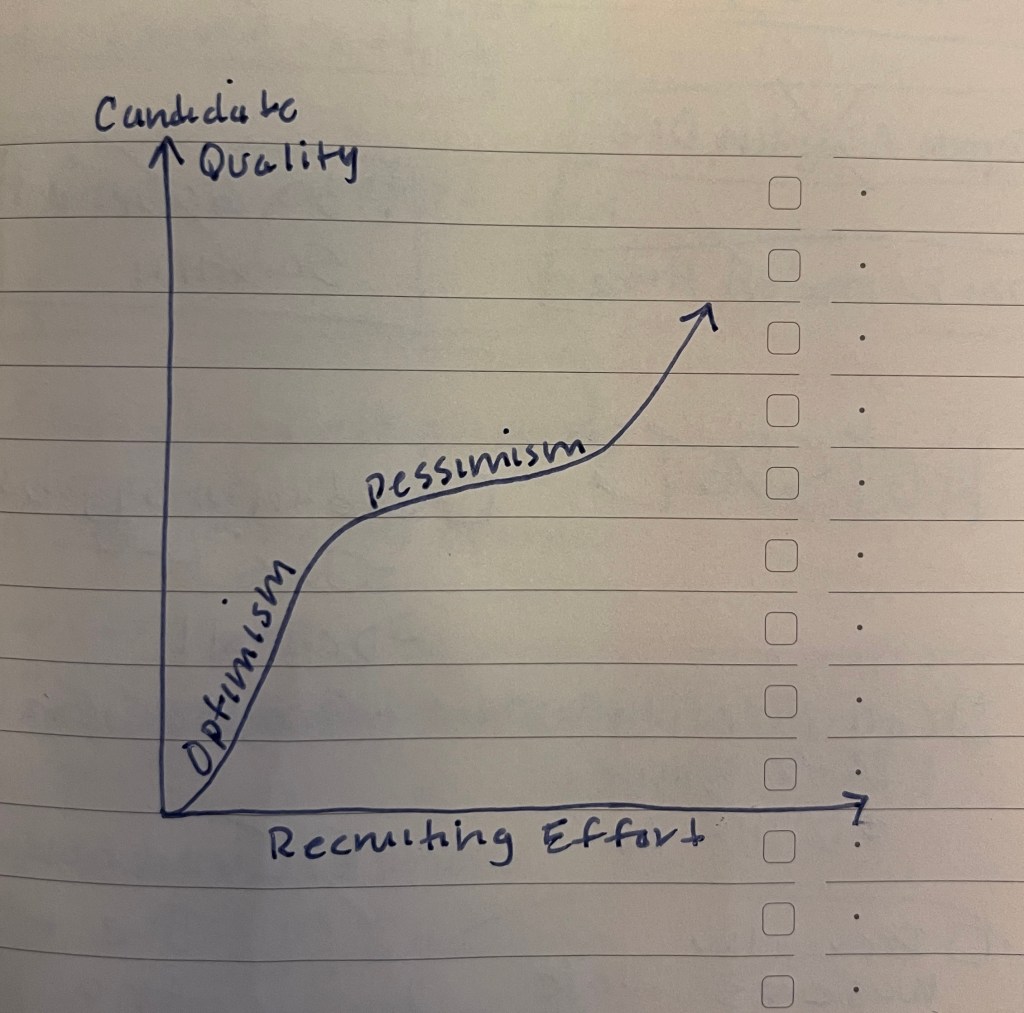
Concept inspired by Sahil Bloom
Bloom suggests that people tend to endure this slog for a bit, but then stop.
Because the candidate pool seems dry or we have to start all over again from the beginning it’s easy to believe that it’s not worth it. And that more effort won’t move the needle. But here’s where you’d be wrong.
Keeping our eye on the process, not the output, is the key. Bloom cites a study showing that process goals, rather than outcome goals, are more likely to achieve a strong outcome.
For example, a process goal of “lift weights for 20 minutes, 3x a week,” is more likely to produce a better result than an outcome goal of “get fit.”
This is why I intentionally place greater emphasis on than many would reasonably expect on my process. Starting over after some disappointing candidates is a big part of my process. And being willing to start over (even more than once) almost guarantees that a great candidate will eventually emerge.
My recruiting clients will often hear me say, “It only takes one candidate.” What I mean is that we’re not trying to hire a team or a bench of experts. We’re looking for one great fit. And the chances are unreasonably high that there’s someone in your immediate area who will be an excellent fit. The key is staying the course until that person shows up.
P.S. This “It only takes one” rule applies to job seekers, too. Yes, the job market might be tight, but you’re only looking for one job. If you apply yourself, chances are that someone, somewhere, needs someone just like you.

 paigenejame.com